
Be honest with yourself, how are you sleeping?
Do you find yourself…
Having trouble falling asleep?
Tossing and turning all through the night?
Waking up unable to go back to sleep?
If you’re not getting the restful night’s sleep you need, your skin is paying the price.
We all know that getting a good sleep is crucial for health and well-being. As it turns out, sleep is just as important for skin health and radiance. As you slumber, your skin cells repair and regenerate, collagen synthesis and blood flow increase, and your skin’s moisture levels balance out. Getting enough sleep can also help avoid those pesky dark circles, while keeping stress (which can wreak havoc on your skin) at bay.
However, if your skin isn’t getting this time to repair, it can start to show pretty quickly.
Researchers at the Skincare Research Institute in Korea found that sleep has significant effects on the skin. After a night of sleep deprivation, they noted measurable changes in skin tone, a major decline in skin barrier function, blood flow, and hydration, and decreased elasticity. All after just one night!
This study isn’t alone either. Another group of researchers followed women with good sleep quality and poor sleep quality to compare skin aging. The difference was remarkable! The good sleepers had markedly lower intrinsic aging scores, and 30% better skin barrier recovery. Their skin also stayed more hydrated and healed faster from UV exposure.
The science connecting sleep and skin health is pretty clear. If your circadian rhythm is off, your skin will show it. But what can you do about it?
How to Get Your Beauty Sleep: Dos and Don’ts
The Dos
 Do avoid bedtime clock-watching
If you can’t sleep, don’t watch the clock. Your brain can start to link your bed with frustration instead of rest, making it harder to sleep.
If you’re still awake after 20 minutes, get out of bed and try a quiet activity. No screens, dim lighting, something relaxing like reading. Once you’re feeling sleepy, get back into bed.
Do stick to short, early naps
Are you a napper? If so, keep your naps short (about 30 minutes or less) and earlier in the afternoon. A later nap or an extra-long one can fool your body into believing that it's already had a deep rest, making it more difficult to get a proper night’s sleep.
Do schedule your meals
Sticking to an eating schedule can improve your metabolism and prevent digestion from disrupting your beauty sleep. Try eating your first meal of the day within 1-2 hours of waking, and your last meal 2-3 hours before bed. If you’re a snacker, make sure to avoid snacking after 8 PM.
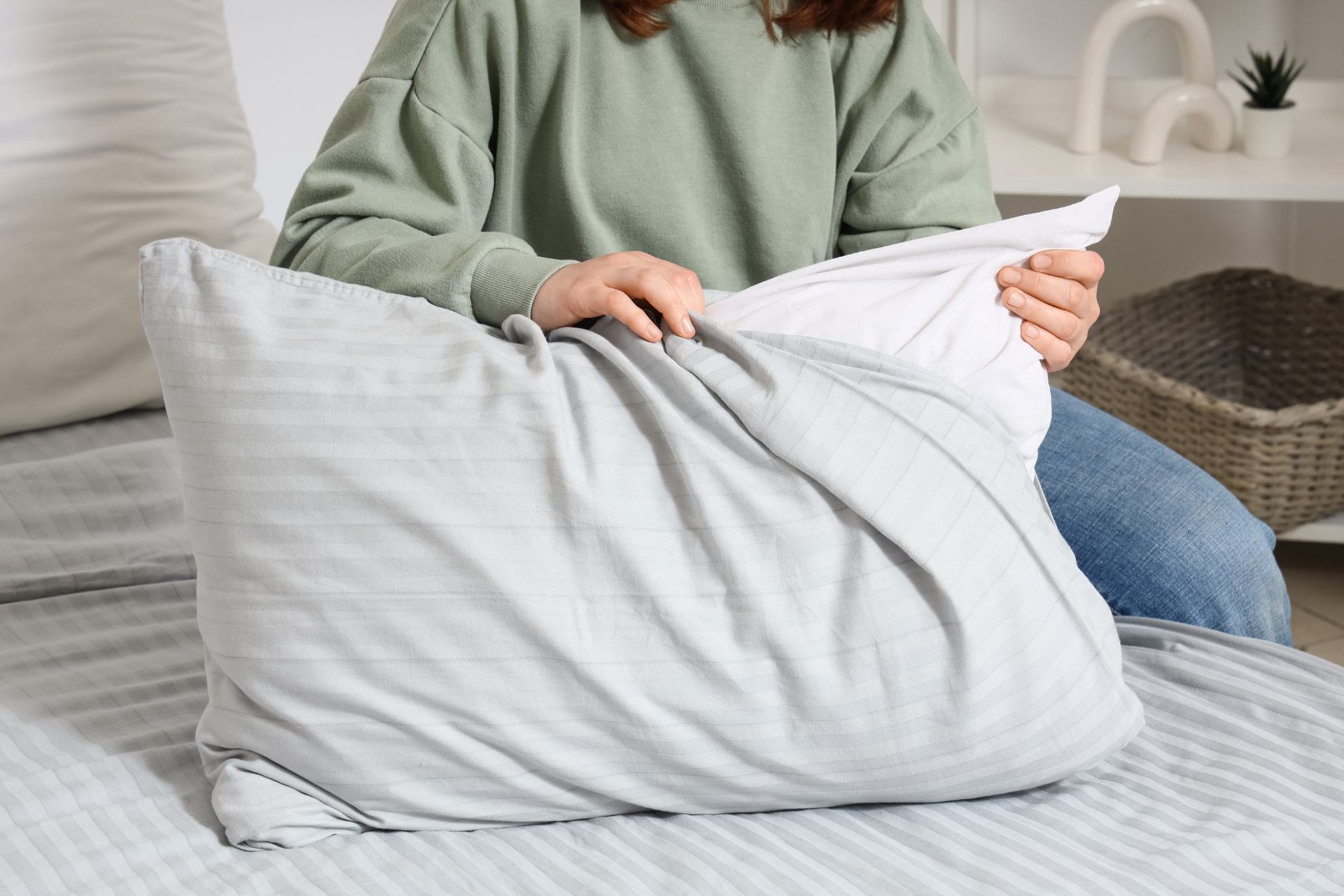
Do change your pillowcases
This one might not directly improve sleep, but it’s crucial for the health of your skin. Change your pillowcases! Here’s why: your hair holds more dirt than any other part of your body. This means your pillowcase can be full of dirt, oil, bacteria, and even dust mites after just a few nights. Ew! And yes, it IS that bad: an Amerisleep study found that after just one week of not washing your pillowcases, they harbour 3 million bacteria per square inch. That’s 17,000 times more bacteria than a toilet seat!
All of this bacteria can throw off your skin’s microbiome, resulting in skin irritation and inflammation, sagging, larger-looking pores, decreased elasticity, and more pronounced wrinkles.
Luckily, the solution is easy: change your pillowcase more often! Aim to wash your pillowcase every two days. Oh, and skip the fabric softeners and dryer sheets. These cause harmful buildup and skin irritation, and can also aggravate allergies and sensitivities.
Want added skin benefits? Invest in a silk or bamboo pillowcase.
The Don’ts
 Don’t drink alcohol or caffeine late in the day
Drinking alcohol or caffeine late in the day can ruin your rest. Although the buzz from a cup of coffee can feel far too short, caffeine can actually stick around in your system for many hours, making it difficult to fall asleep.
Although alcohol can make you feel drowsy, it actually disrupts REM, your deepest, most restorative sleep.
For the best results, cut yourself off by around 3 PM or avoid them entirely.
Don’t exercise right before bed
Yes, exercise CAN improve sleep. However, exercising right before bed raises your body temperature and energy when your body should be cooling off and winding down.
Daytime exercise can support restorative sleep, however. To get the benefits without the sleep disruption, aim for a morning or afternoon workout instead.
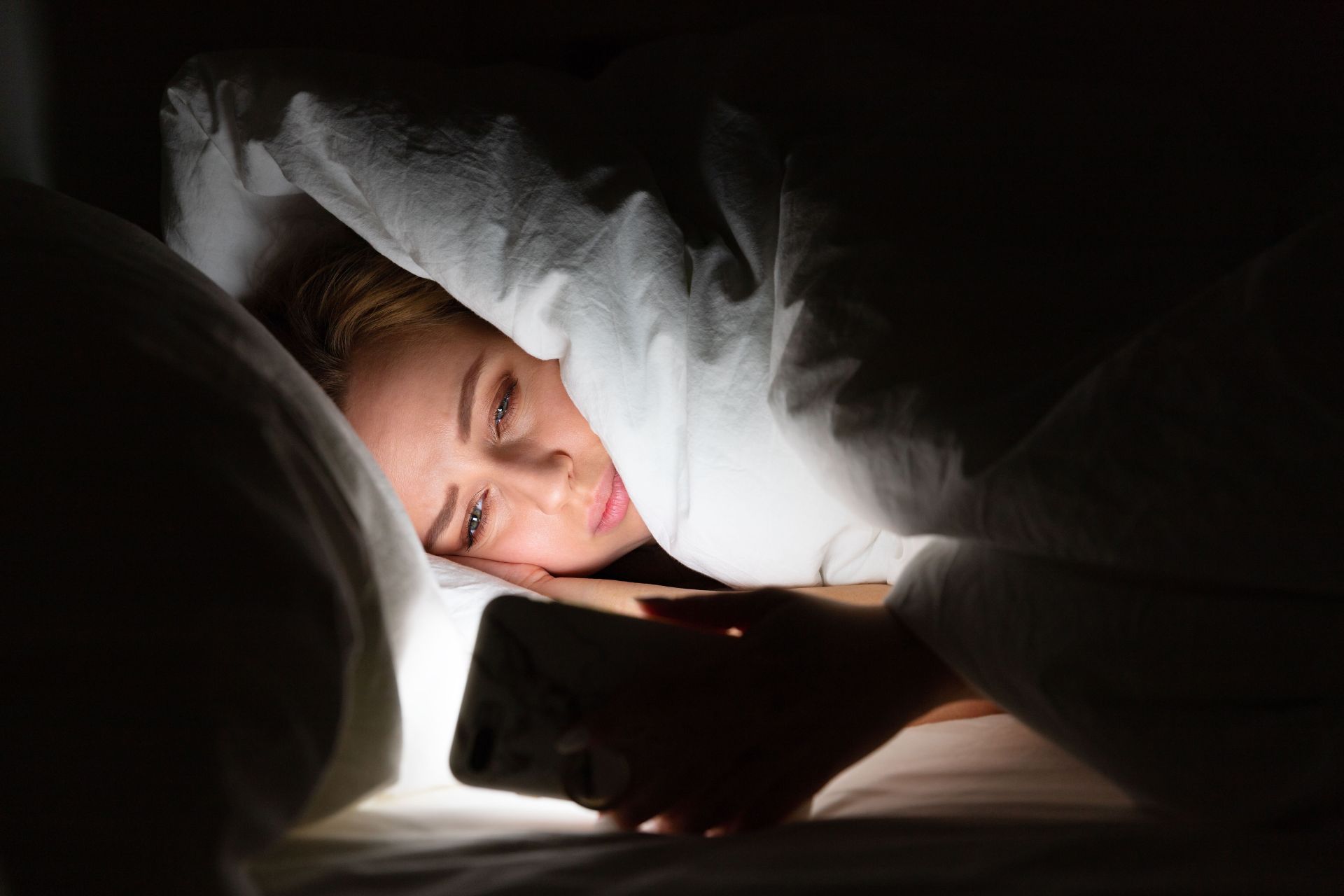
Don’t look at screens before bed
The blue light emitted by devices like smartphones, tablets, TVs, and computers is disruptive to your body's circadian rhythm. Although the temptation to scroll yourself to sleep may be great, avoid screens for an hour before bed to improve your rest. And if you wake in the night, resist the urge to check your phone!
Don’t skip your eye appointment
Your eyes play a surprising role in your sleep cycle. As they age, they naturally let less light in, even less if you’ve got issues such as cataracts. This can throw off your body’s circadian rhythm. Get your eyes checked regularly to ensure they’re healthy and functioning!
Takeaway
The takeaway? Beauty sleep is real (and crucial)! Your skin uses that time to repair, regenerate, produce collagen, and balance moisture levels. So if you’re not getting the sleep you need, it can quickly show on your face.
Luckily, with a few small changes, you can get the beauty sleep you deserve so that you can look and feel your best. Try a few of the tips on our list tonight, and snooze on!
Resources
-
Ebrahim, I. O., Shapiro, C. M., Williams, A. J., & Fenwick, P. B. (2013). Alcohol and sleep i: Effects on normal sleep. Alcoholism: Clinical and Experimental Research, 37(4). https://doi.org/10.1111/acer.12006
-
Hyde, M. (2026, May 4). Bacteria in your bed. Amerisleep. https://amerisleep.com/blog/bacteria-in-your-bed/
-
Kim, M. A., Kim, E. J., Kang, B. Y., & Lee, H. K. (2017). The effects of sleep deprivation on the biophysical properties of facial skin. Journal of Cosmetics, Dermatological Sciences and Applications, 07(01), 34–47. https://doi.org/10.4236/jcdsa.2017.71004
-
Oyetakin-White, P., Suggs, A., Koo, B., Matsui, M. S., Yarosh, D., Cooper, K. D., & Baron, E. D. (2014). Does poor sleep quality affect skin ageing? Clinical and Experimental Dermatology, 40(1), 17–22. https://pubmed.ncbi.nlm.nih.gov/25266053/
-
Mograss, M., Abi‐Jaoude, J., Frimpong, E., Chalati, D., Moretto, U., Tarelli, L., Lim, A., & Dang‐Vu, T. T. (2022). The effects of Napping on night‐time Sleep in healthy young adults. Journal of Sleep Research, 31(5). https://doi.org/10.1111/jsr.13578
-
Wang, C., Song, T., Zhang, Y., Li, N., Xie, L., Xie, M., Jiang, X., Lü, G., Meng, Y., Wang, C., Yue, L., Yang, W., Li, Y., Wu, Y., & Chen, L. (2026). Targeting circadian rhythm for the regulation of skin collagen metabolism. Journal of Cosmetic Dermatology, 25(1). https://doi.org/10.1111/jocd.70638
Ready to give your skin the beauty sleep it deserves?
Book an appointment or arrange a complimentary 10-minute Discovery Call with us to talk about your sleep, skin health, and how we may support you in feeling and looking your best.